Good iPhone battery life depends on two things: how long one charge lasts today, and how well the battery holds up over the years. The habits that help one usually help the other. This guide explains the difference, shows the settings that matter most, clears up some common myths, and tells you when it is time for a new battery.
Every tip below uses features built into iOS. Setting names can differ slightly between iOS versions and iPhone models, so look for similar wording if a menu does not match exactly.
Battery Health vs Daily Battery Life
People often mix these up, but they are not the same:
- Daily battery life is how many hours you get from a full charge. It changes with screen brightness, apps, signal strength and how much you use the phone.
- Battery health is the long-term condition of the battery. All lithium-ion batteries slowly lose capacity as they age and go through charge cycles. A worn battery holds less charge, so daily life gets shorter too.
You can check your battery’s condition in Settings > Battery > Battery Health (on some versions it is called Battery Health & Charging). Here you will see Maximum Capacity, which compares your battery today with when it was new, and a note if the battery needs service. On iPhone 15 and later, you can also see the cycle count and manufacture date in Settings > General > About.
Use Smart Charging Options
Keeping a battery at full charge for long periods adds wear. Apple includes features that reduce this without you having to think about it.
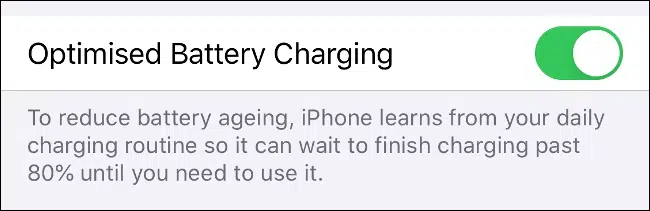
Optimized Battery Charging
This feature learns your daily routine. If you usually charge overnight, your iPhone holds the charge partway and finishes filling up shortly before you normally unplug. It is on by default, and it is worth leaving on.
Charge Limit on iPhone 15 and Later
iPhone 15 and newer models include a charging limit option. You can set the iPhone to stop at 80% instead of filling all the way, and newer iOS versions add a few more limit steps to choose from. This is a good choice if you rarely drain the battery during the day. If you need every hour of use, keep it at full charge; the difference in long-term wear is small compared with avoiding heat.
Here is how to find these settings:
- Open Settings.
- Tap Battery.
- Tap Charging or Battery Health & Charging, depending on your model and iOS version.
- Turn on Optimized Battery Charging, or choose a charge limit on iPhone 15 and later.
- Go back and check Battery Health to see your Maximum Capacity.
Heat Is the Biggest Enemy of iPhone Battery Life
If you remember one thing from this article, make it this: heat damages batteries faster than anything else. Apple says iPhone works best in ambient temperatures between 0 and 35 degrees Celsius (32 to 95 degrees Fahrenheit). Higher temperatures can permanently reduce capacity.
Simple ways to keep your iPhone cool:
- Do not leave it in a hot car, on a car dashboard, or in direct sunlight.
- Avoid charging under a pillow or blanket where heat cannot escape.
- If your iPhone gets hot while charging, remove a thick case.
- Take a break from heavy gaming or long video recording when the phone feels very warm.
- Use good-quality chargers and cables, ideally from Apple or MFi-certified brands.
Cold weather can make the battery drain faster for a while, but that effect is temporary. Heat damage is not.
Turn On Low Power Mode When You Need It
Low Power Mode cuts back background activity, such as mail fetch, some visual effects, automatic downloads and high refresh rates, so your charge lasts longer. Your iPhone suggests it when the battery runs low, but you can turn it on at any time in Settings > Battery > Low Power Mode. You can also add a Low Power Mode button to Control Center so it is one swipe away. The battery icon turns yellow while it is on.
It is safe to use Low Power Mode as often as you like. It does not harm the battery; it only reduces how much power the phone uses.
Settings That Drain iPhone Battery Life
A few settings make a big difference to daily battery life. You do not need to turn everything off, just adjust the ones you do not miss.
- Screen brightness: the display is one of the biggest power users. Keep Auto-Brightness on (in Settings > Accessibility > Display & Text Size) and lower brightness indoors.
- Dark Mode: on iPhones with OLED screens, dark backgrounds can use less power. Turn it on in Settings > Display & Brightness.
- Background App Refresh: go to Settings > General > Background App Refresh and turn it off for apps that do not need to update in the background.
- Location Services: in Settings > Privacy & Security > Location Services, set apps to While Using the App or Never instead of Always.
- ProMotion: Pro models with a high refresh-rate display can limit it with Limit Frame Rate in Settings > Accessibility > Motion.
- Always-On Display: on models that have it, you can turn it off in Settings > Display & Brightness if you want the longest possible battery life.
- Live widgets and activities: a reasonable number of widgets is fine, but very busy Home and Lock Screens add small amounts of background work. Our guide to setting up iPhone widgets shows how to keep only the useful ones.
- Weak signal: in places with poor coverage, the phone works harder to stay connected. Use Wi-Fi where you can, or turn on Airplane Mode when you do not need a connection.
Check Which Apps Use the Most Battery
Open Settings > Battery and scroll down to see a chart of battery level and activity over the last 24 hours or 10 days. Below it is a list of apps and how much of the battery each one used, plus how long it was on screen or in the background.
Look for apps with a lot of background activity compared with screen time. Those are good candidates for turning off Background App Refresh or limiting location access. If a single app suddenly uses far more than usual, update it or delete and reinstall it. iOS may also show Insights and Suggestions here with quick fixes.
Keep iOS Updated
Apple often includes battery and power-management improvements in iOS updates. Install updates from Settings > General > Software Update. After a major update, your iPhone may run indexing and other background tasks for a day or two, so do not judge battery life right away.
iPhone Battery Myths vs Facts
There is a lot of old advice online. Here is what is true for modern iPhones:
| Myth | Fact |
|---|---|
| You must drain the battery fully before charging. | No. Lithium-ion batteries do not need full cycles. Charge whenever it suits you. |
| Charging overnight ruins the battery. | Optimized Battery Charging manages overnight charging, so this is fine. Just keep the phone cool. |
| Closing apps from the App Switcher saves battery. | Usually not. iOS pauses apps in the background, and reopening them from scratch can use more power. Only close an app that is frozen. |
| Using the phone while charging damages it. | Normal use is fine. Heavy gaming while charging can add heat, which is the real issue. |
| Fast charging destroys the battery. | iPhones manage fast charging and slow down as the battery fills. Heat matters more than charging speed. |
| Low Power Mode is bad for the battery. | It is completely safe and only reduces power use. |
When to Replace Your iPhone Battery
Batteries are consumable parts. After a few years, it is normal for the battery to wear down. Consider a replacement if:
- The Battery Health screen shows a message that the battery is significantly degraded or that service is recommended.
- Your iPhone shuts down unexpectedly, even when it shows charge left.
- Performance feels slower and the Battery Health screen mentions performance management.
- You can no longer get through a normal day on one charge.
For a safe repair with genuine parts, use Apple or an Apple Authorized Service Provider. You can start a request through Apple’s iPhone repair page, and read more about how Apple batteries work on Apple’s batteries page. If your iPhone is covered by AppleCare+, a battery replacement may be included when health drops below Apple’s threshold. While you wait for a repair, one-tap Home Screen widgets can cut down on how often you open apps for small tasks.
Frequently Asked Questions
What is a good battery health level for an iPhone?
A higher Maximum Capacity is better. Your iPhone itself will tell you on the Battery Health screen when the battery has worn enough that service is recommended, which is the most reliable sign to watch.
Should I use the charge limit on iPhone 15 or later?
If you usually end the day with plenty of charge left, setting a limit can reduce long-term wear. If you often run low, keep full charging on with Optimized Battery Charging.
Does wireless charging hurt iPhone battery life?
Wireless charging is safe, but it can make the phone warmer than a cable. Use a good-quality charger and remove thick cases if the phone gets hot.
Why does my iPhone battery drain fast after an update?
After an update, iOS runs background tasks like indexing photos and data. Battery life usually returns to normal after a day or two.
Can I improve battery health once it has dropped?
No. Lost capacity cannot be restored by settings or apps. Good habits slow future wear, and a battery replacement brings capacity back to new.
Conclusion
To protect your iPhone battery life, keep the phone cool, leave Optimized Battery Charging on (or use a charge limit on iPhone 15 and later), turn on Low Power Mode when you need extra hours, and trim the settings that drain power. Check your Battery usage screen now and then, and replace the battery through Apple when the Battery Health screen recommends it. These small habits keep your iPhone lasting longer each day and for years to come.
Comments are closed.