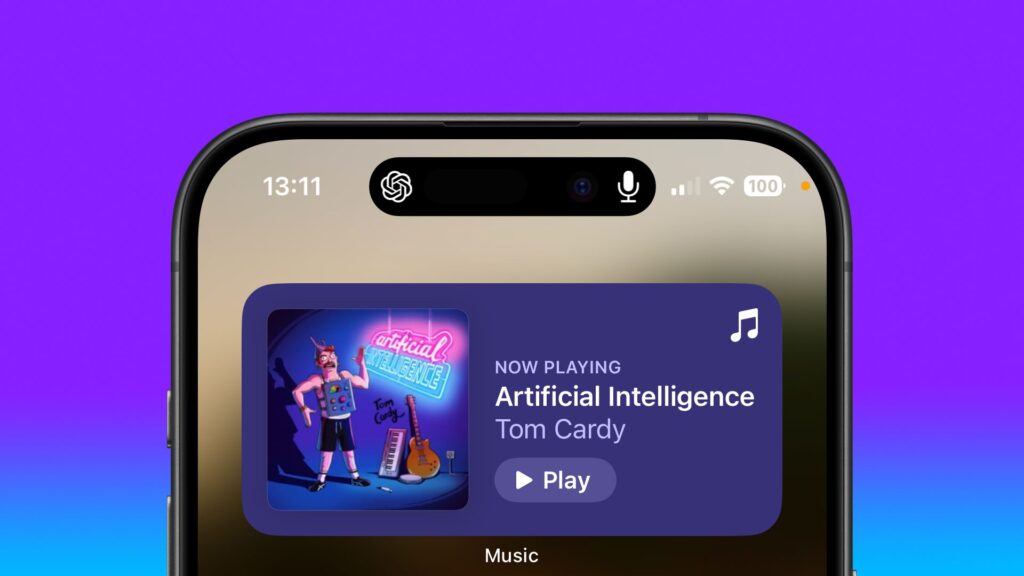
ChatGPT voice mode lets you talk to ChatGPT on your iPhone the way you would talk to a person: you speak, it answers out loud, and you can interrupt it at any time. With the right setting turned on, the conversation keeps going after you leave the app or lock your screen. You can ask for directions help, practise a language or plan your day while you use other apps. This guide shows how to set it up and how to get the most from it.
OpenAI updates the ChatGPT app often, so button names, settings and plan limits may look a little different on your phone. If something has moved, check the OpenAI Help Center for the current steps.
What Is ChatGPT Voice Mode?
ChatGPT voice mode is a hands-free way to use ChatGPT. You don’t type and read. You hold a spoken conversation. The app listens, works out when you have stopped talking, and replies in a natural voice. You can cut in with a follow-up question, change the topic, or ask it to slow down.
Voice mode is different from dictation. Dictation (the microphone button) only turns your speech into text for a normal typed chat. Voice mode is a live back-and-forth conversation. When you finish, a transcript of the chat is saved in your history, so you can read it later on your iPhone, Mac or the web.
Common uses include:
- Practising a new language with a patient partner
- Thinking out loud through a problem or a plan
- Getting quick explanations while your hands are busy, for example when cooking
- Rehearsing a presentation or a job interview
- Asking questions on a walk without looking at your screen
What You Need
To use ChatGPT voice mode on iPhone, you need:
- The official ChatGPT app from OpenAI, installed from the App Store. Search for “ChatGPT” and check that the developer is OpenAI.
- An OpenAI account. Voice is available on free accounts, and paid plans usually give more usage. Limits and plan names change, so check OpenAI’s ChatGPT page for the current details.
- A recent version of iOS and an internet connection (Wi-Fi or mobile data).
- Microphone permission for the ChatGPT app.
How to Start a Voice Conversation in the ChatGPT App
Starting ChatGPT voice mode takes a few seconds:
- Open the ChatGPT app on your iPhone and sign in.
- Tap the voice button (the sound wave icon) next to the message box.
- If iOS asks, allow the app to use the microphone.
- The first time, you may be asked to choose a voice. Pick one you like. You can change it later in Settings.
- Start speaking. ChatGPT replies when you pause.
- To mute your microphone for a moment, tap the microphone button. To finish, tap the X or end button.
Tip: speak in short, clear sentences in a quiet place. If ChatGPT starts answering before you finish, pause less between words or tap to mute while you think.
Keep ChatGPT Voice Mode Running in the Background
By default, a voice chat may stop when you leave the ChatGPT app. The app has a setting for background conversations that keeps ChatGPT voice mode running when you switch to another app or lock your iPhone. This is the feature most people are looking for when they want to “talk to ChatGPT in the background”.
To turn it on:
- Open the ChatGPT app and tap your profile or the menu to open Settings.
- Find the Voice section (on some versions, look under Personalization or Speech).
- Turn on Background Conversations.
- Start a voice chat as normal.
- Swipe up to go to the Home Screen, open another app, or press the side button to lock your phone. The conversation keeps going.
While a background voice chat is running, iOS usually shows a small indicator at the top of the screen, such as in the Dynamic Island or the status bar, and the orange microphone dot. Tap it to go back to ChatGPT. To stop the chat, go back to the app and tap the end button.
If you don’t see the setting, update the app from the App Store. OpenAI sometimes renames or moves options, so the Help Center has the newest instructions.
Start Voice Chats Faster: Action Button, Siri and Shortcuts
Opening the app and tapping the voice button every time gets old. iPhone gives you a few faster ways to start ChatGPT voice mode.
Use the Action Button
If your iPhone has an Action Button, you can set it to start ChatGPT:
- Open Settings > Action Button.
- Swipe to Controls or Shortcut, depending on your iOS version.
- Choose ChatGPT and pick the voice option if it is offered. If not, choose a shortcut that opens a ChatGPT voice conversation.
- Press and hold the Action Button to test it.
Use the Shortcuts App
The ChatGPT app adds actions to Apple’s Shortcuts app. Open Shortcuts, tap +, search for ChatGPT, and add the action that starts a voice conversation. You can then run the shortcut from your Home Screen, from Control Center, or by saying its name to Siri.
Ask Siri
On many setups, you can say something like “Hey Siri, start a voice conversation with ChatGPT” once the app’s shortcuts are set up. The exact phrase depends on the shortcut name you choose.
Ways to Talk to ChatGPT on iPhone
There is more than one way to talk to ChatGPT on an iPhone. Here is how the main options compare:
| Method | How It Works | Best For | Background Use |
|---|---|---|---|
| ChatGPT app voice mode | Live spoken chat inside OpenAI’s app | Long, natural conversations | Yes, with Background Conversations on |
| Siri with the ChatGPT extension (Apple Intelligence) | Siri can pass some questions to ChatGPT on supported iPhones | Quick one-off questions | Works like a normal Siri request |
| Shortcuts and Action Button | Opens a ChatGPT voice chat or runs a ChatGPT action | Starting chats with one press | Depends on the action and app settings |
| Dictation in the app | Turns your speech into a typed message | When you want to read the answer | No |
The Siri extension needs an iPhone that supports Apple Intelligence, and you turn it on in Settings > Apple Intelligence & Siri. Apple Support has the details for your model. For the most natural back-and-forth chat, the ChatGPT app is still the best choice.
Using Voice With AirPods and CarPlay
ChatGPT voice mode works well with AirPods and other Bluetooth headphones. The microphone picks up your voice more clearly, and you don’t get echo from the speaker. Start the chat, put your phone in your pocket, and keep talking. With background conversations on, you can even open a music or maps app while you chat.
In the car, safety comes first. Set up the chat before you start driving and keep your eyes on the road. Depending on your app version and region, ChatGPT may also be available through CarPlay for voice use. If it doesn’t appear on your car’s screen, check the Help Center, and never handle your phone while driving. Remember that ChatGPT can make mistakes, so don’t rely on it for directions or anything safety-critical.
Privacy Tips for Voice Conversations
When you talk to ChatGPT, your audio is processed by OpenAI to understand you and answer. Keep these tips in mind:
- Check your data controls: in Settings, choose whether your chats can be used to improve models, and review what is saved.
- Use temporary chats when you don’t want a conversation saved to your history.
- Watch the microphone dot: the orange dot in the status bar shows when an app is using the microphone. End the chat when you are done.
- Don’t share sensitive details such as passwords, card numbers or medical records out loud.
- Be aware of others around you, since ChatGPT’s replies are spoken out loud unless you wear headphones.
You can read more about how OpenAI handles data on openai.com.
Battery and Data Usage
ChatGPT voice mode sends and receives audio all the time, so it uses more battery and data than typing. A few habits help:
- Use Wi-Fi when you can, especially for long chats.
- End voice sessions when you are finished. Don’t leave them running in the background.
- Check Settings > Battery and Settings > Cellular (or Mobile Data) to see how much ChatGPT is using.
- Turn off Cellular Data for ChatGPT if you only want to use it on Wi-Fi.
Troubleshooting ChatGPT Voice Mode
- Voice button missing: update the app and make sure you are signed in.
- It can’t hear you: go to Settings > Privacy & Security > Microphone and make sure ChatGPT is on.
- The chat stops when you leave the app: check that Background Conversations is turned on in the app’s voice settings, and that Low Power Mode isn’t stopping it.
- It keeps interrupting you: move to a quieter place, use headphones, or mute the mic while you think.
- You hit a limit: voice usage limits depend on your plan. Wait for the limit to reset or check your plan in the app.
If you also use a Mac, read our guide on setting up OpenAI’s ChatGPT desktop app, which supports voice chats too.
Frequently Asked Questions
Is ChatGPT voice mode free on iPhone?
Yes, you can use voice conversations with a free account, but usage may be limited. Paid plans usually offer more. Check OpenAI’s website for the current plan details, as they change.
Can ChatGPT keep talking when my iPhone is locked?
Yes. Turn on Background Conversations in the app’s voice settings, then start a voice chat. It keeps going when you lock your phone or switch apps.
How do I stop a background voice chat?
Tap the indicator at the top of the screen, or open the ChatGPT app, then tap the end or X button. The orange microphone dot disappears when the chat stops.
Is this the same as asking Siri to use ChatGPT?
No. Siri’s ChatGPT extension in Apple Intelligence handles quick requests through Siri. The ChatGPT app’s voice mode is a full, live conversation with ChatGPT inside OpenAI’s own app.
Are my voice chats saved?
A transcript usually appears in your chat history after the conversation, unless you use a temporary chat. You can delete chats and change data settings in the app.
Final Thoughts
ChatGPT voice mode turns your iPhone into a hands-free assistant you can talk to almost anywhere. Turn on Background Conversations so chats keep going when you switch apps or lock your phone, add a shortcut to the Action Button for one-press access, and use AirPods for the clearest sound. Keep an eye on privacy settings and battery use, and end the chat when you are done. Curious where AI interfaces are heading next? Read our explainer on Merge Labs and brain-computer interfaces.